
If you’re searching for “stump grinding near me,” you probably have an old tree stump taking up space in your yard, creating a tripping hazard, or making your landscape difficult to maintain. Removing the visible tree is only part of the job—the remaining stump and roots can continue causing problems long after tree removal.
For homeowners in Glendale, CA, professional stump grinding is a practical way to remove unwanted stumps, reclaim usable yard space, and prepare your property for new landscaping.
What Is Stump Grinding?
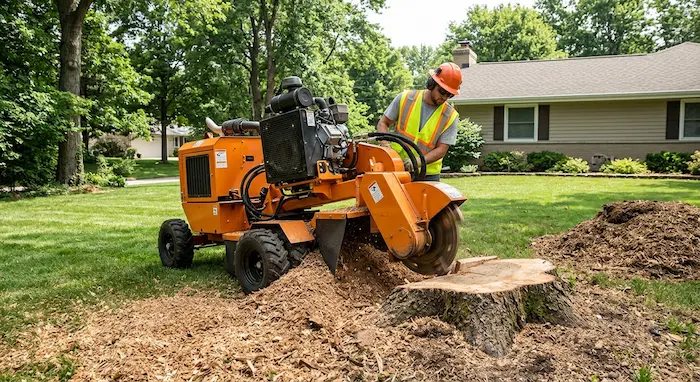
Stump grinding is a professional process that uses a specialized stump grinder to break a tree stump into small wood chips.
Instead of digging out the entire root system, the machine grinds the stump below the surrounding soil level. The resulting wood chips can then be removed or used as landscape mulch, depending on the project.
Professional stump grinding is useful after:
- Tree removal
- Storm-damaged tree removal
- Dead tree removal
- Hazardous tree removal
- Landscape renovations
If you’ve recently had a tree removed, stump grinding in Glendale can be the next step toward restoring your yard.
Why Should You Grind a Tree Stump?
Leaving an old stump in your yard may seem harmless, but it can create several problems.
1. Stumps Create Safety Hazards
An exposed stump can become a tripping hazard for children, visitors, and anyone working in the yard.
Grinding the stump below ground level creates a safer, more usable area.
2. Stumps Attract Pests
Decaying wood can attract insects and other pests. Depending on the condition of the stump, termites, ants, and other wood-destroying insects may become a concern.
3. Stumps Take Up Valuable Space
A large stump can interfere with:
- Lawn maintenance
- New landscaping
- Planting
- Outdoor activities
- Walkways
- Patio improvements
Grinding allows you to reclaim that space.
4. Stumps Can Affect Landscape Appearance
Even after a tree is gone, the remaining stump can make the property look unfinished.
Professional stump removal and grinding services can help create a cleaner appearance.
5. Decaying Stumps Can Become a Long-Term Problem
As a stump breaks down, it may attract fungi and insects while becoming increasingly difficult to remove manually.
Stump Grinding vs. Stump Removal: What’s the Difference?
These two terms are often used interchangeably, but the processes are different.
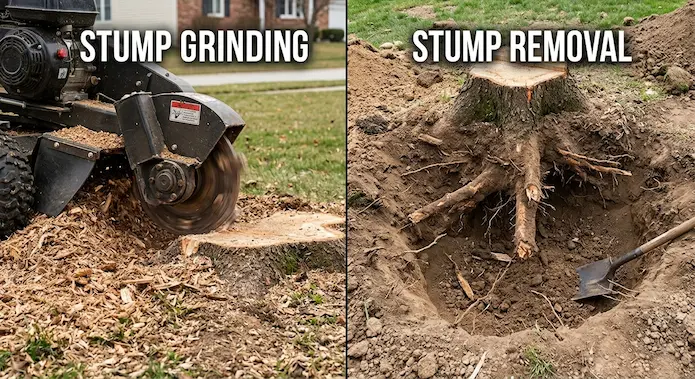
Stump Grinding
With stump grinding, a machine cuts the stump into small pieces below ground level.
Advantages include:
- Faster process
- Less digging
- Minimal landscape disturbance
- Suitable for many residential properties
- Usually more affordable than complete excavation
Stump Removal
Complete stump removal involves digging out the stump and, depending on the situation, larger portions of the root system.
This may be appropriate when you need to completely clear an area for construction, planting, or another landscape project.
Which Option Is Better?
For many homeowners, stump grinding is the practical choice when the goal is simply to eliminate the visible stump and reclaim the surface area.
A professional tree care company can evaluate the stump and recommend the most appropriate option.
How Does Professional Stump Grinding Work?
The process is relatively straightforward, but proper equipment operation and site preparation are important.
Step 1: Inspect the Stump
The technician evaluates the stump’s size, location, condition, and accessibility.
They also look for potential obstacles around the work area.
Step 2: Prepare the Area
The surrounding area is cleared of objects that could interfere with the equipment.
Professionals also consider nearby:
- Structures
- Landscaping
- Fences
- Walkways
- Irrigation systems
Step 3: Grind the Stump
A specialized stump grinder uses a rotating cutting wheel to break the stump into small pieces.
The machine gradually works across the stump until it reaches the desired depth.
Step 4: Remove or Level the Debris
The resulting wood chips can be removed or redistributed depending on your landscaping plans.
Step 5: Restore the Area
After grinding, the remaining hole can be filled with appropriate soil or prepared for grass, plants, or another landscaping project.
How Deep Does Stump Grinding Go?
The grinding depth depends on the stump, location, equipment, and your intended use of the area.
For typical landscaping purposes, the stump can generally be ground several inches below the surrounding soil level.
If you’re planning to build, install hardscaping, or plant a new tree in the same location, tell the tree care professional before work begins. The desired depth may affect how the project is handled.
How Much Does Stump Grinding Cost in Glendale?
The cost of stump grinding varies from property to property.
Factors that influence pricing include:
- Stump diameter
- Number of stumps
- Root flare
- Accessibility
- Stump condition
- Grinding depth
- Cleanup requirements
- Nearby structures or landscaping
A general residential stump grinding project may cost approximately $100–$500 per stump, although larger or difficult-to-access stumps can cost more.
The best way to determine your actual cost is to request an on-site estimate.
Can You Grind a Stump Yourself?
Small stump removal projects may look like a simple DIY job, but professional equipment is powerful and requires careful operation.
A stump grinder can cause serious injuries if used incorrectly. There may also be underground utilities, irrigation lines, rocks, or other obstacles around the stump.
Professional stump grinding services in Glendale have the equipment and experience to complete the work while minimizing unnecessary damage to the surrounding landscape.
What Happens to the Tree Roots After Grinding?
Stump grinding does not remove every root beneath the ground.
The remaining roots generally decompose naturally over time. The rate depends on the tree species, soil conditions, moisture, and other environmental factors.
If you plan to install a structure or plant another tree in the exact same location, discuss the remaining root system with your tree care professional before starting the next project.
When Should You Schedule Stump Grinding?
You don’t necessarily need to wait for a particular season to grind a stump.
Homeowners may schedule stump grinding when:
- A recently removed tree leaves an unwanted stump
- A decaying stump becomes a pest concern
- The stump interferes with mowing
- You’re redesigning the landscape
- You’re preparing the yard for new planting
- You want to eliminate a tripping hazard
If the stump is in a difficult location or near structures, getting a professional assessment first is especially important.
Can Stump Grinding Improve Your Landscape?
Absolutely.
Once an unwanted stump is removed below ground level, you have more flexibility when planning your landscape.
The area can potentially be used for:
- New lawn
- Flower beds
- Ground cover
- Decorative landscaping
- New outdoor features
However, if you plan to plant a new tree in the same location, consider the remaining roots and previous tree species before selecting the replacement.
How Stump Grinding Fits Into Tree Removal
Stump grinding is often the final stage of a larger tree removal project.
For example:
Tree Inspection → Tree Removal → Stump Grinding → Cleanup → Landscape Restoration
If you have a hazardous or dead tree that hasn’t been removed yet, our tree removal services in Glendale can help address the tree safely before the stump is ground.
Why Choose Professional Stump Grinding in Glendale?
Choosing a local professional gives you access to appropriate equipment and experience with residential tree care.
A qualified tree service provider can help with:
- Stump assessment
- Safe grinding
- Debris management
- Site cleanup
- Tree removal
- Tree trimming
- Arborist inspections
This also makes it easier to handle related tree care needs through one experienced provider.
Frequently Asked Questions
How much does stump grinding cost near me?
Residential stump grinding commonly ranges from about $100 to $500 per stump, but the actual price depends on stump size, accessibility, depth, and cleanup requirements.
Is stump grinding better than stump removal?
For many residential properties, stump grinding is faster and less disruptive than completely excavating the stump and root system. The right choice depends on what you plan to do with the area afterward.
How long does stump grinding take?
A small, accessible stump may be completed relatively quickly, while large or difficult-to-access stumps can require substantially more time.
Can I plant grass after stump grinding?
Yes. Once the area has been properly cleaned and filled with suitable soil, it can generally be prepared for grass or other landscaping.
Does stump grinding remove the roots?
No. Stump grinding primarily removes the visible stump and grinds it below ground level. Larger portions of the root system generally remain underground and decompose naturally.
Do I need stump grinding after tree removal?
Not always, but grinding is often recommended if you want to eliminate the visible stump, improve safety, or reclaim the space for landscaping.
Final Thoughts
An unwanted stump doesn’t have to remain in your Glendale yard for years. Stump grinding near you can remove the visible remains of a tree, reduce safety hazards, discourage pest problems, and give you more usable landscape space.
Whether you’ve recently removed a tree or inherited an old stump, professional stump grinding can be a straightforward way to finish the tree removal process.
If you also need tree removal, tree trimming, or arborist services in Glendale, consider having the entire property evaluated so related tree care problems can be addressed at the same time.
Ready to Get Rid of That Stump?
Get a Free Stump Grinding Estimate in Glendale
Call today to discuss your stump and get a professional assessment.
